- Chosen for certified reduction claims
- Quotes list equipment and work up front
- Under-sink space reviewed before you decide
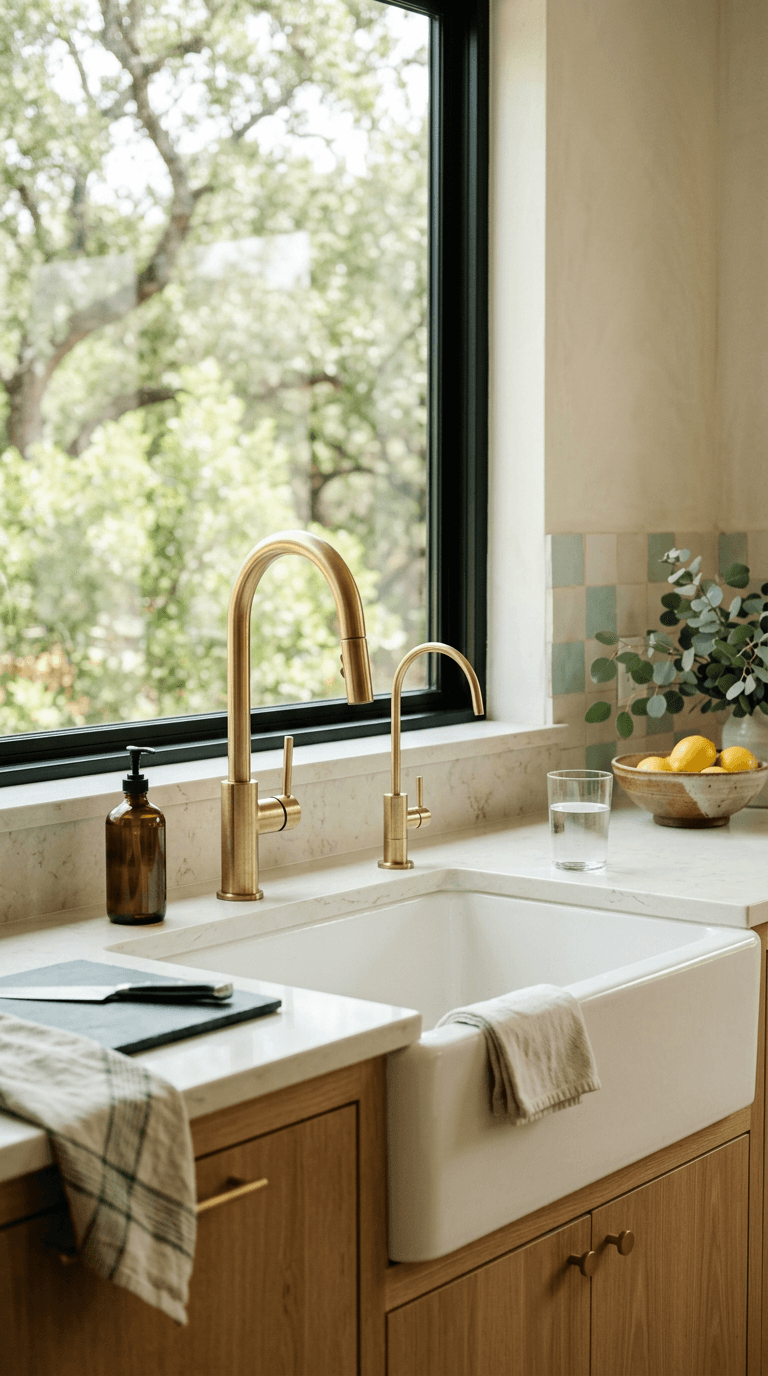
Where it installs
Under the kitchen sink
With its own drinking-water faucet
Why reverse osmosis
What a drinking-water system changes.
RO focuses on the water you actually consume. It treats one faucet thoroughly instead of the whole house lightly.
Cleaner-tasting drinking water
By reducing many dissolved substances, RO can noticeably change how water tastes in a glass, coffee, or ice.
Lower dissolved solids
Reducing total dissolved solids, including sodium and chloride, is a typical capability of RO membranes.
Certified reductions for specific concerns
Models certified under NSF/ANSI 58 can carry claims for concerns such as lead, fluoride, nitrate, or certain PFAS.
Right where you cook
A dedicated faucet at the kitchen sink supplies treated water for drinking and cooking.
- Claims depend on the exact certified model. RO treats water at one faucet, not the whole home. It isn’t a water softener and isn’t a substitute for disinfecting microbiologically unsafe water.
Know before you buy
What RO can — and can’t — reduce.
Reverse osmosis is powerful, but not universal. Here’s how it compares with whole-house filtration, concern by concern:
Typical capability
What a properly maintained RO system usually reduces.
Only if certified
Requires a specific certified claim for the exact model.
Not designed for it
A different technology is the right tool.
What each is certified to remove
Under-sink RO vs. a standard whole-house sediment and carbon system — and the certification to look for on the exact model.
Chlorine taste & odor
Look for: NSF/ANSI 42
Sand & sediment
Look for: Sediment prefilter rating
Total dissolved solids
Look for: NSF/ANSI 58
Dissolved sodium & chloride
Look for: NSF/ANSI 58
Lead
Look for: NSF/ANSI 53 or 58 lead claim
Fluoride
Look for: NSF/ANSI 58 fluoride claim
Nitrate
Look for: NSF/ANSI 58 nitrate claim
Certain PFAS
Look for: NSF/ANSI 53 or 58 PFAS claim
Hardness (whole home)
Look for: NSF/ANSI 44 water softener
Microorganisms
Look for: Disinfection, e.g. NSF/ANSI 55 UV
Shows typical product categories, not any specific model. A standard certification doesn’t guarantee every claim — NSF/ANSI 58 requires TDS reduction, while lead, fluoride, nitrate, and PFAS claims are optional. Verify the exact certified claims before buying.
How it works
Three steps to better drinking water.
- 1
Identify your drinking-water concerns
Taste, dissolved solids, or a specific contaminant? Your utility’s annual report — or a lab test for wells — shows what to look for.
- 2
Choose a certified system
Confirm the reduction claims for the exact model, then review under-sink space, the drain connection, and faucet location. Your quote describes it all before you decide.
- 3
Arrange installation and filter changes
The system installs under the sink with its own faucet. Afterward, care is replacing pre-filters and the membrane on the manufacturer’s schedule.
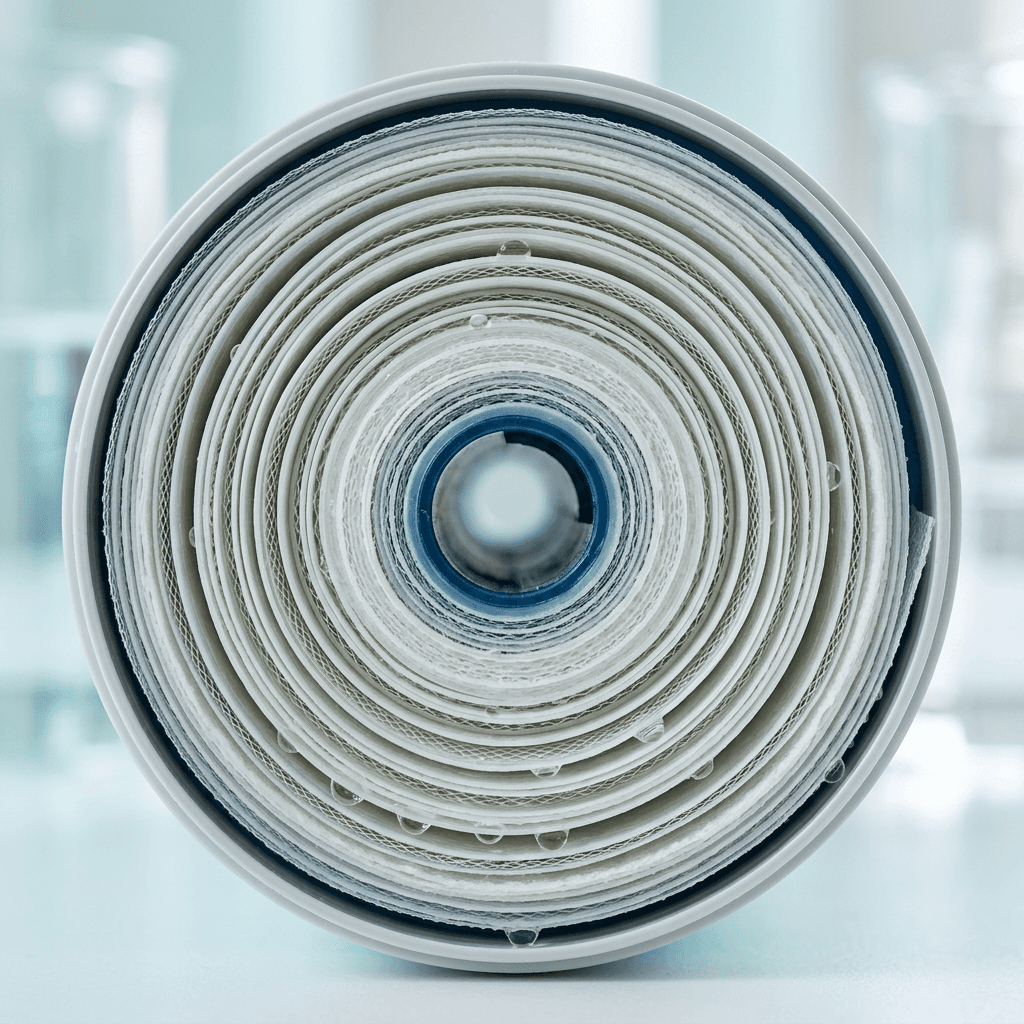
Spiral-wound RO membrane, up close
The basics
How does reverse osmosis actually work?
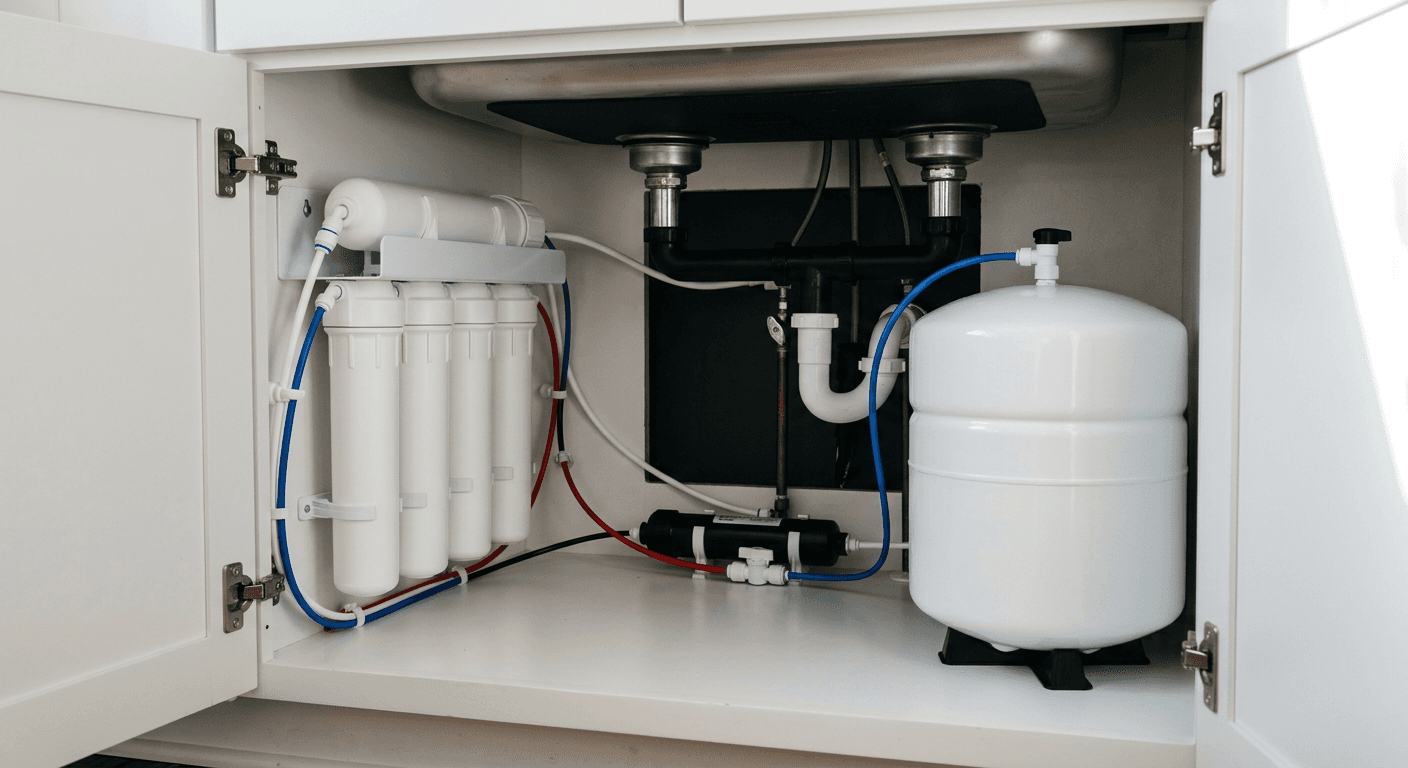
Reverse osmosis pushes water through a semi-permeable membrane that holds back many dissolved substances. Before the membrane, sediment and carbon pre-filters remove particles and chlorine that would otherwise damage it.
Treated water is stored in a small tank (or produced on demand in tankless designs) and delivered through a dedicated faucet. As part of normal operation, the system sends some water to the drain to flush away what the membrane holds back — how much varies by model.
Reverse osmosis addresses
- Total dissolved solids, sodium, and chloride
- Taste of drinking and cooking water
- Specific contaminants — only when the model is certified for them
It isn’t designed to
- Treat water for the whole home
- Soften water for showers and appliances
- Disinfect microbiologically unsafe water
For scale throughout the house, look at a water softener; for chlorine at every tap, whole-home filtration. Well owners should start with what to test in Texas well water.
Before you buy
Compare RO with whole-house filtrationChoosing a system
- Certification
- NSF/ANSI 58 claims for the exact model and concern.
- Production rate
- Gallons per day that suit your household’s drinking and cooking.
- Efficiency
- How much water goes to drain per gallon of treated water.
- Tank or tankless
- Storage tank versus on-demand production.
What affects the quote
- System type
- Number of stages, tank style, and any remineralization stage.
- Under-sink space
- Room for the filters and tank alongside what’s already there.
- Drain and faucet
- A drain connection and a spot for the dedicated faucet.
- Extras
- Such as a line to a refrigerator or ice maker.
Ongoing care
- Pre-filters
- Usually replaced more often than the membrane.
- Membrane
- Replaced on the manufacturer’s interval.
- Sanitizing
- Follow the manufacturer’s guidance during filter changes.
- Early signs
- Slower flow or a change in taste means a filter is due.
Service areas
Installing in Waco and across Central Texas.
Each area page covers local water from the utility’s own report. Enter your ZIP code to confirm we install at your address.

Questions
Reverse osmosis questions, answered.
Does reverse osmosis waste water?
RO systems send some water to the drain as part of normal operation — that’s how the membrane flushes away what it holds back. How much varies a lot by model. EPA WaterSense-labeled systems meet a higher efficiency standard. See reverse osmosis vs. whole-house filtration for a comparison.
Does RO remove minerals from drinking water?
Yes. RO reduces many dissolved minerals, including calcium and magnesium, along with other dissolved solids. Some people prefer the taste; others choose a system with a remineralization stage. Most dietary minerals come from food rather than water.
Can reverse osmosis treat the whole house?
Residential RO is almost always installed at one faucet for drinking and cooking. Whole-house RO exists but is a specialized, larger system. If the problem is hardness throughout the home, a water softener is the usual answer.
How often do RO filters need changing?
Pre-filters are typically replaced more often than the membrane itself. Intervals depend on the model, your water, and use, so follow the manufacturer’s schedule. Slower flow or a change in taste are common signs a filter is due.
Do I need a water softener with reverse osmosis?
Not necessarily. In very hard water, softening ahead of an RO system can help protect the membrane from scale, and it treats hardness for the rest of the home. Whether it’s worth it depends on your hardness and goals.
What information helps with a quote?
Your ZIP code, whether you’re on city water or a private well, roughly how many people live in the home, and what you’re noticing about your water. Photos of where your main water line enters the house are helpful but not required. You don’t need to know which equipment you need.
Ready for a better water experience?
Tell us what you’d like to change about your drinking water, and explore your options. We’ll put together an estimate that spells out the equipment and installation before you decide.